

Re-sourC
Material supply challenges
CONTEXT
With resource depletion, economic pressures and geopolitical instability, the construction sector will face increasing pressure on raw material supplies.
Resource scarcity and market instability cause significant and unpredictable fluctuations in material prices. Without a clear understanding of these risk factors, it is impossible to control costs and implement a resilient sourcing strategy.
Material prices
The gradual depletion of natural resources and the limited availability of certain materials expose the construction sector to a growing risk of shortages.
Supply pressures
Geopolitical risks
Conflicts, trade restrictions and reliance on certain supplier countries increase raw material supply risks and make the construction sector more vulnerable.
What is Re-SourC ?

To address these challenges, SO2T developed Re-SourC, a tool for assessing material criticality and supply chain vulnerability.
It helps organisations in the construction sector identify resources at risk and develop adaptation strategies to strengthen their resilience.
KEY CONCEPTSRe-SourC is based on three interconnected concepts: material criticality measures vulnerability associated with a material, while adaptive capacity assesses the company’s ability to respond. Together, they determine its level of resilience.
From criticality to resilience
A material’s vulnerability to economic, supply and environmental risks. The more essential a material is and the harder it is to replace, the higher its criticality.

Criticality
A company’s ability to reduce its dependence on a critical material through lower-carbon alternatives, recycling, reuse and changes to its sourcing strategy.
Adaptive capacity


Resilience
A company’s ability to anticipate and respond to supply disruptions while maintaining its operations.
METHODOLOGIE & SCOPEEach material is assessed against three complementary factors: economic vulnerability, supply risks and environmental impacts, based on the data from recognised institutions such as ADEME, INSEE, the USGS, Eurostat and the World Bank.
Assessing material criticality

Assessment of the material’s importance to operations, its price volatility, the degree of dependence on it and the availability of substitutes.
Economic vulnerability
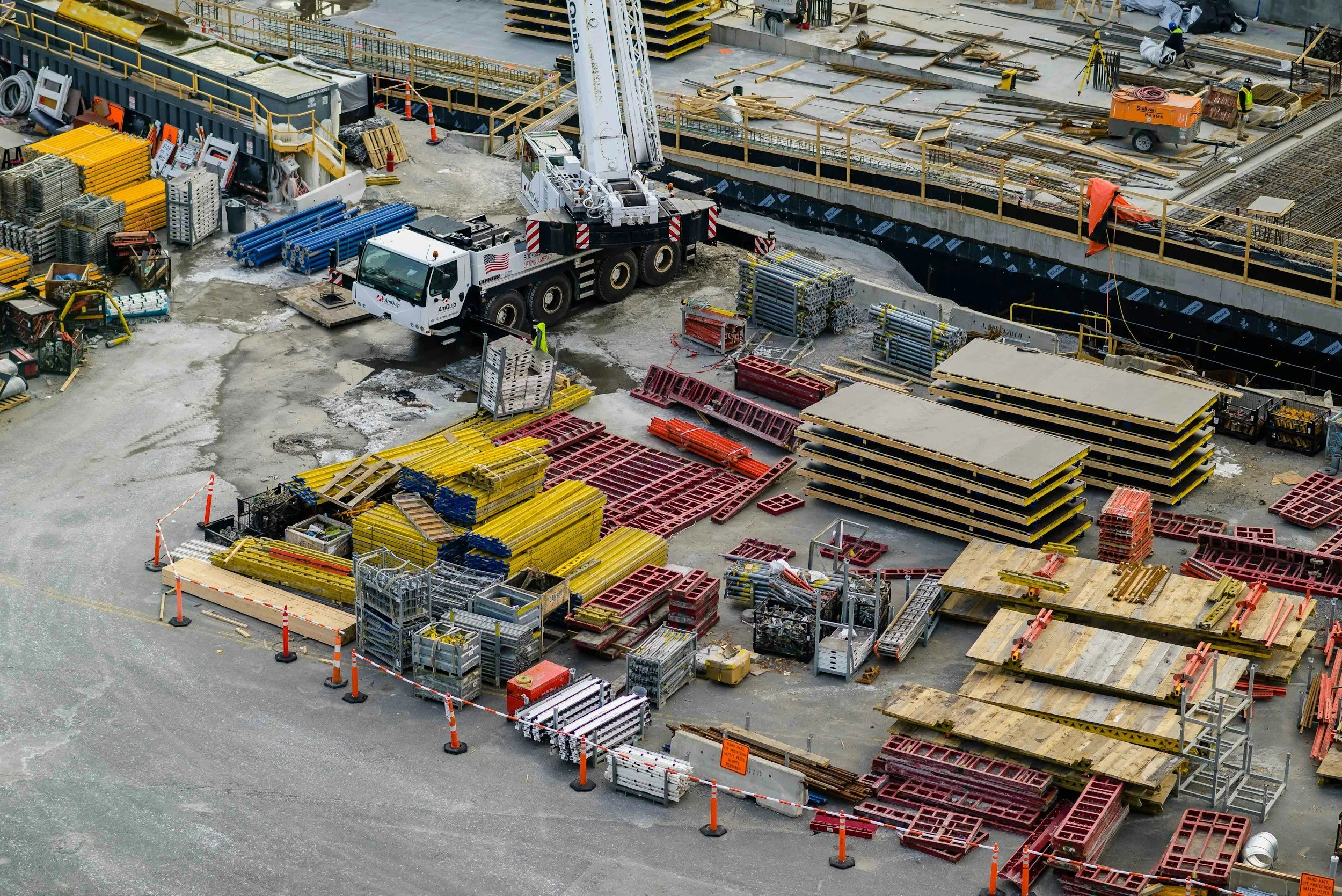
Analysis of the material’s abiotic depletion potential (ADP), the geographical concentration of supplier countries, import dependency and geopolitical stability.
Supply risks

Assessment of the material’s carbon footprint throughout its life cycle, its impacts on human health and its contribution to exceeding planetary boundaries.
Environmental impacts
The Re-SourC database covers eight key material categories for the construction sector, with indicators drawn from cited sources and updated as institutional data becomes available.
8 material categories

Steel
High risks associated with geopolitical concentration and significant price volatility.

Aluminium
Highly energy-intensive, with reliance on imported bauxite and low-carbon electricity.

Concrete
A widely used material facing increasing carbon-related regulatory pressure.

Timber
A renewable resource exposed to risks associated with forest management and wildfires.

Mineral wool insulation
Stone wool and glass wool, both reliant on mineral raw materials.

Plastic
Derived from petroleum and exposed to environmental regulations and dwindling fossil resources.

Plâtre
An abundant resource that is geographically concentrated in Europe.

Glass
Energy-intensive production and reliance on high-quality silica sand.

From corporate strategy to project delivery
APPLICATIONSRe-SourC assesses material criticality at two complementary levels, using a shared database and methodology.
GouvernanceStrategic analysis
Assess the overall criticality of your material supplies across your organisation and project your resilience to 2030, 2040 and 2050 by combining your results with ADEME’s future scenarios.
ProjetAssess a project’s material criticality at the design stage, optimise its material mix and check its alignment with your organisation’s strategic roadmap.
Operational analysis
RESULTS
From data to decisions
Re-SourC provides a comprehensive assessment of your company’s vulnerability, presented in a detailed study report and an executive summary.
Criticality scores for your projects and your company.
A forward-looking assessment of material criticality through to 2050.
Tailored data
Tailored recommendations to guide your sourcing decisions.
Would you like to explore the Re-SourC platform?
Join SO2T and Re-SourC in shaping a more sustainably built environment.
Get in touch today!
Publications











ÉNERGIE